
We Want The Same Thing. So Why Does It Feel Like War?
When Two Providers Speak Different Dialects of Devotion
Joan Nwosu
4/22/202610 min read
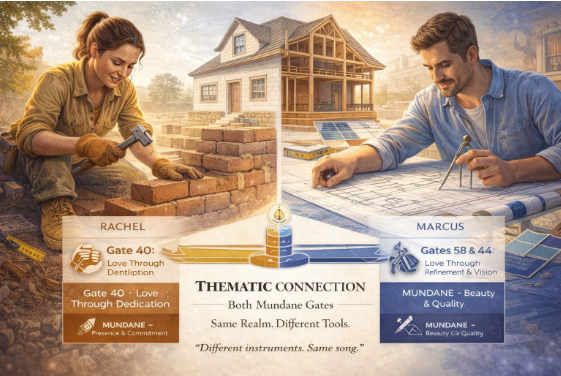
Rachel and Marcus had the same goal: build a life together.
They both valued commitment. They both wanted partnership. They both believed in showing up.
So why did every conversation about their future feel like a negotiation? Why did they both feel unseen, unappreciated, like they were speaking different languages even though they were saying the same words?
The tool showed them something they never expected:
They were both speaking the language of love. Just different dialects.
The Early Days
Rachel met Marcus at a mutual friend's wedding.
She noticed him during the toasts—how he teared up when the groom thanked his bride for "refining him into a better man." How he leaned over to his friend and whispered something that made them both laugh.
Marcus noticed Rachel during the reception—how she made sure the elderly grandmother had a chair, how she quietly fixed the bride's train when it got caught, how she anticipated needs before anyone asked.
They were both doers. Both givers. Both people who showed love through action.
Their first conversation lasted three hours.
"What do you want in a relationship?" Marcus asked.
"Someone who doesn't quit when it gets hard," Rachel said. "Someone who means their vows. Someone who shows up."
"Same," Marcus said. "I want to build something real. Something that lasts."
They smiled at each other.
Finally. Someone who wanted what they wanted.
Moving In Together
Six months in, they decided to move in together.
It made sense. They were serious. They were building toward marriage. Marcus's lease was up.
Rachel suggested they get a place together. Neutral territory. Start fresh.
Marcus agreed but wanted to wait until they could afford something nice. "I want us to have a home we're proud of. Something we built intentionally, not just the first thing we could afford."
Rachel frowned. "We can make any place a home. What matters is that we're together."
"But why settle when we could do it right?"
"I'm not settling. I'm prioritizing us over the aesthetics."
Marcus felt a flash of frustration but let it go.
They moved into Rachel's apartment temporarily. "Just until we find the right place," Marcus said.
Rachel made space for him in her closet, rearranged her furniture, meal-prepped for both of them on Sundays.
Marcus appreciated it. He really did. But he kept thinking about the "right" place. The one they'd choose together. The one that would be theirs.
The First Real Fight
It happened on a Tuesday.
Marcus came home from work excited. He'd been researching neighborhoods, looking at listings, building a spreadsheet of potential apartments.
"Look at this one," he said, pulling up a listing. "Three bedrooms, great natural light, in our budget if we both cut back on a few things. We could turn the third room into an office for you."
Rachel barely looked. "I'm happy here."
"I thought we were looking for a place together."
"We are. Eventually. But I don't see why we need to rush. We're building our life right now. The apartment is just logistics."
Marcus closed his laptop. "It's not just logistics to me. Our home matters. Where we live, how it looks, how it feels—that's part of building a life."
"And showing up for each other every day is what actually builds a life. Not the thread count of our sheets or the perfect lighting."
"Why are you making me feel shallow for caring about our environment?"
"Why are you making me feel like I'm not doing enough when I've rearranged my entire life to make space for you?"
They went to bed angry.
The Pattern Emerges
The fights kept coming. Different topics. Same underlying tension.
The vacation debate:
Rachel wanted to visit Marcus's family for Thanksgiving. Show up, be present, strengthen the relationship.
Marcus wanted to plan a trip just for the two of them. Something special, beautiful, intentional. Create memories.
"My family is expecting us," Rachel said.
"We can see them at Christmas. This could be our thing. Just us."
"Being there for family IS our thing. That's what partnership means."
"Partnership also means creating our own traditions. Making intentional choices about our time."
The wedding debate:
Rachel's coworker invited them to her wedding. Rachel wanted to go—support her colleague, show up for the relationship.
Marcus looked at the registry. "We barely know her. Why are we spending $300 on a gift and a weekend for someone you talk to twice a year?"
"Because that's what you do. You show up for people."
"You show up for people who matter. We should be intentional about where we invest our time and resources."
"Everyone matters."
"Not equally."
Rachel looked at him like he'd said something cruel.
The Breaking Point
It came during a conversation about engagement rings.
Rachel had been hinting. They'd been together over a year. They lived together. They talked about marriage.
Marcus wanted to propose. He really did. But he was saving for the perfect ring. Something meaningful. Something that reflected how much he valued her.
"I don't need a perfect ring," Rachel said one night. "I just need you to commit."
"I am committed."
"Then why are we waiting?"
"Because I want to do this right. I want the ring to be special. I want the proposal to be something we remember forever."
"I'll remember that you chose me. That's what makes it special."
"Why can't both things matter?"
"Because one is about US and one is about optics."
Marcus flinched. "That's not fair. Wanting something beautiful and intentional isn't about optics. It's about honoring what we're building."
"We're already building it! Every day I show up, make dinner, support you, make space for you—that's the building. The ring is just a symbol."
"Symbols matter."
"Presence matters more."
They stared at each other across an impossible divide.
The Tool
Rachel's sister sent her the Love Gates Connection Tool after hearing about yet another fight.
"Just try it," she texted. "I think you'll find it helpful."
Rachel plugged in both their information.
Rachel's Love Gates:
Gate 40 (The Devoted Provider / The Resentful Provider)
Marcus's Love Gates:
Gate 58 (The Refinement Guru / The Chief Improvement Officer)
Gate 44 (The Precise Visionary / The Status Seeker)
The tool highlighted: THEMATIC CONNECTION
"You're both in the MUNDANE category (Love WITH someone). You both want deep, personal, romantic partnership. But you're expressing it through different gates. You're playing in the same realm with different instruments."
Rachel read further:
"Gate 40 loves through dedicated provision, showing up, committed action. Gate 58 loves through refinement, elevation, making everything better. Gate 44 loves through recognition, vision, building something valuable."
She felt something click.
Marcus wasn't choosing aesthetics over her. He was loving her through refinement—making their life beautiful because beauty, to him, was an expression of love.
Marcus wasn't being shallow about the ring. His Gate 44 needed to recognize value, choose quality, create something worth celebrating.
And she wasn't settling by being happy in her apartment. Her Gate 40 loved through dedication—being present, showing up, committing to the relationship regardless of circumstances.
They were both loving hard.
Just differently.
The Conversation
Rachel showed Marcus the tool that night.
"Look. We're both Mundane. We both want the same thing—deep partnership, commitment, building a life together."
"Then why does it feel like we want opposite things?"
"Because your gates are 58 and 44. Mine is 40. We're loving in the same dimension but through different frequencies."
Marcus read the descriptions.
"So when I want the perfect apartment, the perfect ring, the perfect trip—"
"You're loving me through refinement and recognition. You're trying to build something beautiful because that's how you express devotion."
"And when you just want to be together, show up for family, not worry about the details—"
"I'm loving you through dedication. I'm trying to prove my commitment through presence."
They sat in silence.
"We're not incompatible," Rachel said finally. "We're just speaking different dialects."
The Translation
They didn't fix everything overnight.
But they started translating.
For the apartment:
Rachel said: "I understand you need our home to reflect your vision, your sense of what's valuable. That matters to you. Can we compromise? Let's stay here for three more months while you find the place that feels right. I'll support the search."
Marcus said: "I understand you need to know I'm committed to showing up, regardless of logistics. Can I prove that to you in other ways while we look? I'll meal prep with you on Sundays. I'll be present here, in this space, even while we plan for the next one."
For the ring:
Rachel said: "I know you need the ring to be something you're proud of, something that represents your precise vision for us. Take the time to find it. But can you tell me you're planning to propose? So I know it's coming?"
Marcus said: "I'm proposing. I promise. I want to marry you. And I want the symbol to match the magnitude of what I feel. Can you trust that waiting for the right ring doesn't mean I'm not sure about you?"
For the vacation:
They compromised. Thanksgiving with family (Rachel's Gate 40 need to show up). A special trip for New Year's (Marcus's Gate 58 need to create something refined and intentional).
Both. Not either/or.
What The Tool Showed Them
The Love Gates Connection Tool didn't solve their differences.
But it reframed them.
The tool revealed:
They're both in the Mundane category (love WITH someone specifically)
They both want deep partnership and commitment
But Rachel's Gate 40 expresses love through dedicated presence
Marcus's Gates 58 & 44 express love through refinement and recognition
This created a Thematic Connection - same realm, different expression
They were never opposing each other—they were complementing each other
The tool also explained the gift:
"Thematic connections can teach you multiple ways to access the same love realm. You can learn from each other's expression without competing. Your variety is your strength—if you honor it."
Six Months Later
Rachel and Marcus got engaged.
The ring Marcus chose was beautiful. Vintage. Meaningful. Exactly what his Gate 44 needed to recognize as valuable.
The proposal happened at Rachel's apartment. The place she'd made home for both of them. Where her Gate 40 had been showing up every day.
Both mattered.
They're planning the wedding now. Rachel handles the people—making sure everyone feels included, showing up for the relationships. Marcus handles the details—the venue, the aesthetic, the refinement that makes it beautiful.
They're not fighting anymore about whose approach is right.
They're building together. Different instruments. Same song.
What This Means For You
If you're reading this and thinking: "We want the same thing but we keep fighting about HOW to get there. We both value commitment/partnership/building a life together but we can't agree on what that looks like"—you might be in a Thematic connection.
You're both in the same love realm (both Transcendent OR both Mundane).
But you're expressing it through different gates.
If You're Both MUNDANE (Most Common):
You both want love WITH someone. Personal. Intimate. Devoted.
But the expression varies:
Gate 40: Loves through dedication and sustainable commitment. Shows up regardless of circumstances.
Gate 44: Loves through recognition and building something valuable. Creates vision together.
Gate 58: Loves through refinement and improvement. Makes everything better.
Gate 41: Loves through fantasy and desire. Builds dreams together.
Gate 28: Loves through purpose and meaningful struggle. Finds significance through partnership.
Gate 55: Loves through emotional depth and intimacy. Feels everything intensely together.
The conflict: You judge each other's expression as "wrong" when it's just different.
If You're Both TRANSCENDENT (Less Common):
You both love THROUGH someone to connect with something greater.
But the expression varies:
Gate 25: Loves spirit, divine timing, universal connection.
Gate 15: Loves humanity, flow, rhythms of existence.
Gate 46: Loves the body, embodiment, physical presence.
Gate 10: Loves being alive, authentic selfhood, existence itself.
The conflict: You compete over whose transcendent expression is more "evolved."
How To Use The Connection Tool For This
The Love Gates Connection Tool will show you:
If you're both in the same category - Both Mundane or both Transcendent
Which specific gates each person has - Your different expressions of the same realm
That you're in a Thematic connection - Same dimension, different instruments
How to honor the variety - Instead of making each other wrong
For Dating: See The Dialect Difference Early
If Rachel and Marcus had known they were both Mundane but with different gate expressions, they could have:
Anticipated the "how we build this" debates
Appreciated each other's approach from the start
Not wasted energy trying to prove who was "right"
Celebrated the variety instead of fighting it
The tool shows you you're playing the same game with different strategies—so you can collaborate instead of compete.
For Couples: Stop The "My Way vs Your Way" War
If you're already together and every decision feels like a battle about approach:
The tool shows you're not opposing forces
You're both trying to love in the same realm
You just have different gates expressing it
You can learn from each other instead of fighting each other
Your variety makes you stronger, not weaker
What This Is NOT
This is not:
An excuse to never compromise ("My gate just works this way")
A hierarchy ("Gate 58 is better than Gate 40")
Permission to dismiss your partner's needs ("That's just your gate talking")
A reason to make each other wrong
This is an invitation to appreciation.
Why This Matters
Because the most frustrating relationships aren't the ones where you want completely different things.
They're the ones where you want the SAME thing but can't agree on how to create it.
Where you both value commitment but fight about what commitment looks like.
Where you both want partnership but clash on what partnership means.
Where you're both speaking the language of love—just different dialects.
Thematic connections have incredible potential.
You're already in the same realm. You already understand each other's dimension of love.
You just need to stop making each other's expression wrong.
Rachel's Gate 40 dedication is beautiful.
Marcus's Gate 58 refinement is beautiful.
Together? They're building something both solid AND stunning.
That's the gift of Thematic connections.
When you stop competing and start conducting.
Try The Connection Tool
See if you're in the same love realm. See your different gates. Stop the war. Start the collaboration.
Visit [LINK] to access the Love Gates Connection Tool.
Select love gates. Look at the connection type.
If it says Thematic Connection, you're in the same dimension with different expressions.
Now you can appreciate the variety.
Share this with a partner who "wants the same thing but differently."
Share this with someone tired of fighting about how when you agree on what.
Share this with anyone who feels like they're speaking the same language but still not understanding each other.
They wanted the same thing.
They just spoke different dialects of devotion.
Now they're building in harmony.
JOAN NWOSU
Pioneer of Relationship Intelligence. Author. Creator of LACE™
2026 Joan Nwosu. All rights reserved.